Complete Engineering Service
Self-builders and contractors, build without worries! Enjoy a full cost analysis of your project, accurate and precise assembly plans, as well as personalized advice. Start your project off right with our engineering service.
Always benefit from accurate estimates thanks to state-of-the-art technology, detailed quotes, and fast service. Our team even travels to ongoing construction sites to answer your questions.
Comprehensive Material Calculation
Full service for the renovation and construction of a house, commercial building, or multi-unit housing, as well as expansion projects: additions, building a room above the garage, or constructing an attached or detached garage.
Calculation and Design Services
- Calculation of joists and roof trusses
- Analysis of dead and live loads for floors and roofs
- Determine the correct type of joists and required height for each project
- Specify the proper connector/hanger models
- Design of engineered wood layout plans for floors and roofs
- Advice on construction methods, new standards, and material selection
- Offer innovative solutions to help clients reduce construction costs while maintaining excellent quality
Estimation Service Offered For:
- Materials for complete houses
- Renovation materials
- Basement (materials up to drywall stage)
- Garage
- Deck, pergola, and veranda
- Shed
- Agricultural or commercial projects (stable, barn, warehouse, etc.)
- I-joists or open-web joists
- Prefabricated roof trusses
- Wood beams and columns
- Concrete or concrete blocks
- Steel reinforcement
- Doors and windows
- Exterior siding and caulking
- Insulation and vapor barrier
- Shingles or complete roofing systems
- Steel sheets for walls or roofing
- Soffits and fascias
- Drywall and accessories
- Suspended ceilings
- Stairs, stringers, and handrails
- Interior doors
- Baseboards and moldings
- Primer and paint
Floor Joists
What types of floor joists are available from us?
I-joists are structural wood members used in the construction of floors and roofs. They are made of two pieces of solid or engineered wood connected by a thin OSB web (a type of wood panel). They come in various heights, the most common being 9-1/2", 11-7/8", 14", and 16", but they can go up to 24".
Their main advantages: they are lightweight, easy to cut on-site, and can be installed quickly. Holes can also be drilled (following the manufacturer’s specifications) to allow for plumbing or electrical wiring. This is the most economical option among the different types of joists, and their quality is verified by independent inspectors.
Open-web joists with metal connectors are wooden structures made of two straight pieces (the chords) connected by diagonal members. The entire assembly is firmly joined together using metal plates. This type of joist is very practical: it provides a solid surface for flooring installation and allows for easy passage of wires, pipes, or ducts without the need for cutting. They are available custom-made for each project or as adjustable stock versions. Typically, they are installed in one continuous span, resting on a wall or beam.
Engineered Wood and Accessories
We offer a wide selection of engineered products for your construction projects. Browse the sections below to learn more about these engineered wood products.
LVL (Laminated Veneer Lumber) is a construction material made by bonding several thin layers of wood together, all oriented in the same direction. This process makes the product extremely strong and stable. It is mainly used for beams, columns, and headers. LVL is available in various widths (from 9-1/2" to 24") and lengths (up to 60 feet), with a standard thickness of 1-3/4" and up to 5-1/4". LVL is more efficient than solid wood—it uses about 75% of the tree in production, which is roughly 30% more than traditional lumber. It is also valued for its excellent load-bearing capacity and long-term dimensional stability.
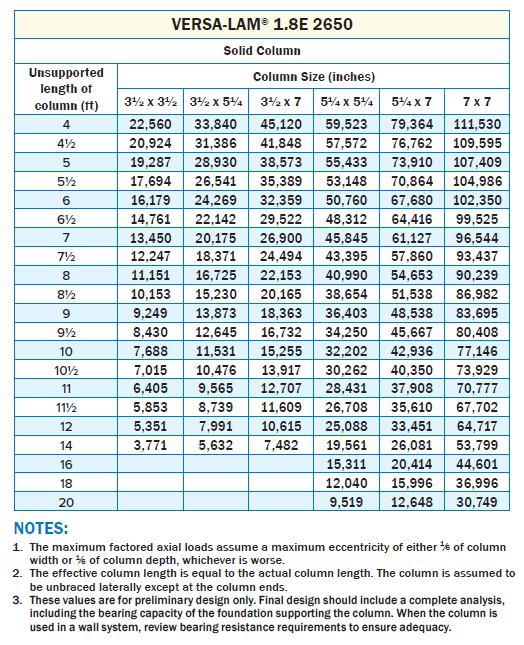
LSL (Laminated Strand Lumber) is made from thin, elongated wood strands that are all oriented in the same direction and then compressed to create a strong, uniform material. This product is commonly used to manufacture beams, headers, rim boards, and wall studs, particularly in multi-story construction. It offers excellent resistance to bending, impact, and compression, and is even stronger than steel for its weight. LSL is available in various sizes, with thicknesses ranging from 1-3/4" to 3-1/2" and depths from 9-1/2" to 20".
PSL (Parallel Strand Lumber) is made from long wood strands that are all glued in the same direction and compressed to form an exceptionally strong material. It is primarily used for main beams, long-span headers, and columns. In addition to its high strength, PSL has an attractive appearance and can be left exposed in architectural designs. It is available in several sizes, including widths of 1-3/4", 3-1/2", 5-1/4", and 7", and depths ranging from 9-1/2" to 18-3/4". The only PSL product available on the market is known as Parallam™.
The rim board is a wood member installed around the edge of a floor system. It helps keep the joists properly aligned and contributes to supporting the weight of the upper floors.
Depending on the material used, its thickness varies:
- 1-1/8" in OSB
- 1-1/4" in engineered wood (LSL)
When the floor is nailed to this rim board, the entire structure becomes stiffer and more solid.
Steel hangers are metal components used to securely connect wood members such as beams or joists. They are factory-made from thin, rust-protected steel and feature pre-punched holes for structural nails or screws. Various models are available depending on the type of connection required. Choosing the right hanger is essential to ensure the structural integrity of the assembly. These accessories are mainly used in light-frame construction but can also be used for larger structures. For outdoor use or with treated wood (which is more corrosive), hangers with enhanced rust protection should be selected.