Facebook Pixel

Srping Seasonal

Matériaux Pont Masson Blog

Discover Neosol products for lawn care

In the spring, many homeowners take advantage of the warmer weather to restore their yard. After winter, lawns often need some attention to regain their density, colour and overall health.

To make lawn maintenance easier, certain solutions have been specifically developed for our climate. Neosol products, available at Pont-Masson, are designed to help homeowners care for their lawns throughout the season. Developed for North American conditions, these products aim to simplify lawn care while helping achieve better results.


A brand designed for our climate

Neosol products were developed with the expertise of agronomists to offer solutions adapted to the climate conditions of Quebec and other northern regions.

The goal is to make lawn care easier and more accessible for homeowners. The product line includes several solutions designed to:

  • nourish the lawn

  • improve turf density

  • support healthy growth

  • help grass better resist environmental conditions

These products are generally easy to apply and can be integrated into a seasonal lawn care routine.


Solutions to nourish your lawn

Among the most popular products in the Neosol line are liquid fertilizers designed to support active lawn growth.

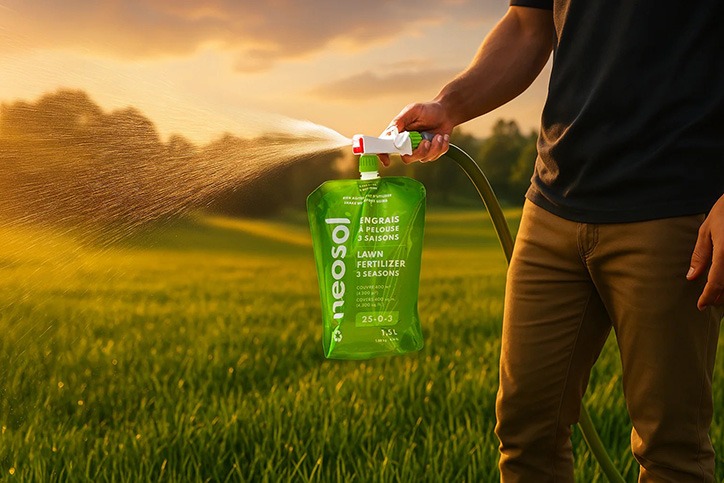
For example, the 25-0-3 liquid lawn fertilizer is formulated to promote greener, denser grass during the growing season. Its high nitrogen content helps stimulate greening while added biostimulants support nutrient absorption.

This type of fertilizer is typically applied when:

  • the snow has completely melted

  • the ground has thawed

  • the lawn begins to turn green

In northern climates like Quebec, the first application is usually done in the spring as the lawn begins to grow again.


Grass seed for repairing or improving lawns

In addition to fertilizers, the Neosol lineup also includes grass seed mixes designed to improve lawn density.

These seed blends can be used to:

  • repair damaged areas

  • overseed an existing lawn

  • establish a new lawn

The mixes are formulated to provide good resistance to foot traffic and climate conditions while promoting healthy growth.

A denser lawn can also help reduce the presence of weeds.


Simple solutions for seasonal lawn maintenance

Neosol also offers complete solutions designed to make lawn care easier throughout the season.

For example, some seasonal kits include several fertilizer applications and accessories needed to maintain your lawn from spring through fall. These kits are designed to simplify the process and help homeowners follow a consistent lawn care routine.

Each application typically covers several thousand square feet, making these products suitable for most residential properties.


A simple approach to keeping your lawn healthy

With regular care, it is possible to gradually improve the health and appearance of your lawn. Neosol products are designed to support homeowners throughout the season with solutions that are simple to use.

By combining fertilization, seeding and regular maintenance, you can encourage a lawn that is denser, stronger and better adapted to our climate.

Neosol products, available at Pont-Masson, offer a practical solution for homeowners who want to maintain their lawn themselves while achieving reliable results season after season.
 
 
Matériaux Pont Masson Blog

Cracked driveway after winter: when to repair asphalt or pavers

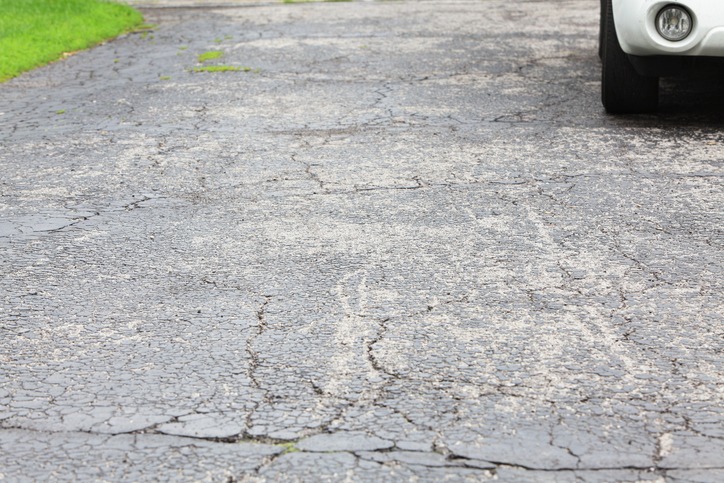
After winter, many homeowners notice cracks or small surface damage in their driveway. Freeze–thaw cycles, moisture and heavy snow can put outdoor surfaces under a lot of stress.

Fortunately, many issues can be repaired easily if they are addressed early. A quick inspection in the spring helps identify signs of wear before the damage gets worse.

Here is how to know when to repair your asphalt or paver driveway and what solutions may help.


Why driveways deteriorate after winter

In Quebec and Ontario, temperature fluctuations play a major role in driveway damage.

When water seeps into small cracks and freezes, it expands. Over time, this process can widen cracks and weaken the surface.

Other factors can also contribute to damage:

  • poor drainage around the driveway

  • a weakened gravel base

  • the weight of vehicles

  • normal material wear over time

A spring inspection often helps identify small issues that can be repaired quickly.


Cracks in asphalt driveways

Cracks are one of the most common problems with asphalt driveways.

When cracks are narrow and shallow, they can often be repaired with an asphalt crack filler designed for small repairs. For example, a product like Asphalt Crack Filler 3.78 L can be used to seal cracks and prevent water from penetrating the surface.

Before repairing cracks, it is recommended to:

  • clean the crack to remove debris

  • ensure the surface is dry

  • apply the repair product according to the manufacturer’s instructions

Repairing cracks early helps extend the lifespan of the driveway.


Cracks in paver or concrete driveways

In paver or concrete driveways, cracks may appear in the joints or directly in the surface.

Here are some common situations.

Open paver joints
Over time, the sand between pavers can erode. Adding polymeric sand can help stabilize the pavers and prevent movement.

Shifted or sunken pavers
If certain areas have settled, it may be necessary to remove the affected pavers, adjust the base and reinstall them.

Many of these repairs can be completed with basic tools.


Protecting asphalt with a driveway sealer

In addition to repairing cracks, applying an asphalt sealer is a good way to protect your driveway and extend its lifespan.

Over time, asphalt can dry out due to sun exposure, rain and temperature changes. A sealer forms a protective layer that helps reduce wear and water infiltration.

For example, a product such as Asphalt Driveway Sealer – 4-Year Protection (17 L) can help protect the surface and refresh the appearance of the driveway.

Applying a sealer can also:

  • slow down the appearance of cracks

  • protect the surface from moisture

  • restore a more uniform look to the asphalt


When to apply driveway sealer

In general, it is recommended to apply an asphalt sealer every two to three years, depending on the condition of the surface.

Spring and early summer are usually the best times for this type of maintenance when:

  • temperatures are mild

  • the surface is clean and dry

  • no rain is expected for several hours

Before applying the sealer, it is best to repair cracks and thoroughly clean the driveway.


A project most homeowners can handle

Applying asphalt sealer is a project that many homeowners can complete themselves.

The steps are usually simple:

  1. clean the driveway to remove dirt and debris

  2. repair cracks if necessary

  3. apply the sealer using a roller or squeegee

  4. allow the surface to dry according to product instructions

With proper preparation and the right materials, this project can often be completed in just a few hours.


Signs that larger repairs may be needed

In some situations, a simple repair may not be enough.

Certain signs may indicate that larger work is required:

  • wide cracks that continue to expand

  • multiple sunken areas

  • standing water on the surface

  • major deformation of the asphalt

When these problems occur, it may be better to consider partial or complete driveway resurfacing.


Simple maintenance can extend the life of your driveway

With regular maintenance, it is possible to extend the lifespan of an asphalt or paver driveway.

A few simple habits can make a big difference:

  • repair cracks as soon as they appear

  • clean the driveway each spring

  • apply sealer when needed

  • check drainage around the driveway

By addressing small problems early, you can keep your driveway in good condition for many years.

Matériaux Pont Masson Blog

Spring Maintenance: 10 Simple Checks to Do Around Your Home

As the snow melts and warmer temperatures return, early spring is the perfect time to walk around your property and check how your home held up over the winter. Harsh weather, snow accumulation and freeze–thaw cycles can leave behind minor damage that is easy to fix if caught early.

The good news is that many of these tasks are simple and can be done by homeowners themselves with just a few basic tools.

Here are a few quick checks you can do at the start of spring.


1. Clean the gutters

Gutters often collect leaves, small branches and debris during the winter. When they are clogged, rainwater may overflow and accumulate near the house.

What you can do:

  • remove debris by hand or with a gutter scoop

  • rinse the gutters with a garden hose

  • make sure downspouts direct water away from the foundation

This simple task helps prevent several moisture-related problems.


2. Check the roof from the ground

You do not need to climb onto the roof to do a first inspection. A quick look from the ground can often reveal early signs of damage.

Look for:

  • missing or lifted shingles

  • pieces of shingles on the ground

  • uneven areas on the roof surface

If you notice anything unusual, it may be worth scheduling a more detailed inspection.


3. Inspect window and door caulking

The seals around windows and doors can crack over time due to temperature changes.

Take a quick look to see if the caulking is:

  • cracked

  • peeling

  • missing in some areas

Replacing it is a quick job that improves sealing and helps reduce energy loss.


4. Look at the foundation

Freeze–thaw cycles can sometimes cause small cracks in foundations.

Walk around your home and check for:

  • visible cracks

  • signs of moisture

  • water pooling near the foundation

If the ground around the house is very flat, adding soil to create a slight slope can help move water away from the foundation.


5. Inspect the deck or patio

Decks are exposed to the elements all winter long.

Take a few minutes to check:

  • cracked or damaged boards

  • loose screws or fasteners

  • the stability of railings

Often, tightening screws or replacing a board is enough to fix the issue.


6. Check the driveway and concrete surfaces

Freeze–thaw cycles can cause small cracks in asphalt or concrete.

Look for:

  • cracks in the driveway

  • chipped steps

  • open joints in pavers

Small cracks can often be repaired easily with patching products.


7. Clean up debris in the yard

Winter often leaves behind branches and debris around the property.

A quick cleanup helps:

  • clear the lawn

  • prepare the yard for spring

  • prevent damage to lawn equipment later in the season

A rake, a wheelbarrow and a few yard bags are usually all you need.


8. Check fences and outdoor structures

Snow and strong winds can sometimes weaken sections of fencing.

Walk around and check if:

  • posts are loose

  • boards are broken

  • a section of the fence is leaning

In many cases, tightening screws or replacing a board is enough.


9. Test the outdoor faucet

Before starting outdoor work, it is useful to check your outdoor faucet.

Turn the water on and make sure:

  • there are no leaks

  • water flows normally

  • the hose connection is in good condition

This quick check helps avoid surprises when you start using it.


10. Clean outdoor surfaces

Spring is also a good time to freshen up outdoor surfaces.

A simple cleaning can improve the appearance of:

  • the deck

  • the driveway

  • outdoor steps

  • exterior siding

A garden hose or pressure washer is often enough to remove dirt accumulated over the winter.


A good way to start the season

Taking a little time in early spring to complete these checks can help prevent larger repairs later in the season.

By tackling these simple tasks, you prepare your home and yard for the warmer months ahead while keeping your property in good condition.