Warning – Electrical Safety
The information provided in this article is for general informational purposes only. Electrical work must comply with the Québec Construction Code and, in some cases, be performed by a certified master electrician. When in doubt, consult a qualified professional.
Choosing the right electrical wire is essential for safety, code compliance, and performance. In Canada, electrical wires are identified by their color, gauge, and designation (e.g. 14/2, 12/3), which can be confusing if you’re not familiar with these standards.
This guide will help you understand and identify the most common electrical wire types used in Canadian homes.
Understanding Wire Designations: 14/2, 12/3, etc.
Designations such as 14/2 or 12/3 provide two key pieces of information:
1. Wire Gauge (First Number)
The gauge refers to the thickness of the conductor, measured using the AWG (American Wire Gauge) system.
The smaller the number, the thicker the wire and the higher the amperage it can carry.
| Gauge | Max Amperage | Common Uses |
|---|---|---|
| 14 AWG | 15 A | Lighting, standard outlets |
| 12 AWG | 20 A | Kitchen, bathroom |
| 10 AWG | 30 A | Dryer, water heater |
| 8 AWG | 40 A | Range |
| 6 AWG | 55 A | Oven, subpanel |
2. Number of Conductors (Second Number)
The second number indicates the number of insulated conductors, not including the ground wire.
-
14/2 = 2 insulated conductors + 1 ground wire
-
12/3 = 3 insulated conductors + 1 ground wire
“/3” cables are commonly used for:
-
three-way switches
-
appliances requiring two hot wires
-
shared circuits
Electrical Wire Colors (Canadian Standards)
Wire color indicates the function of each conductor in a circuit.
| Color | Function |
|---|---|
| Black | Hot (live) |
| Red | Secondary hot |
| White | Neutral |
| Green or bare copper | Ground |
Important: A white wire may sometimes be used as a hot wire if it has been re-identified with black or red tape.
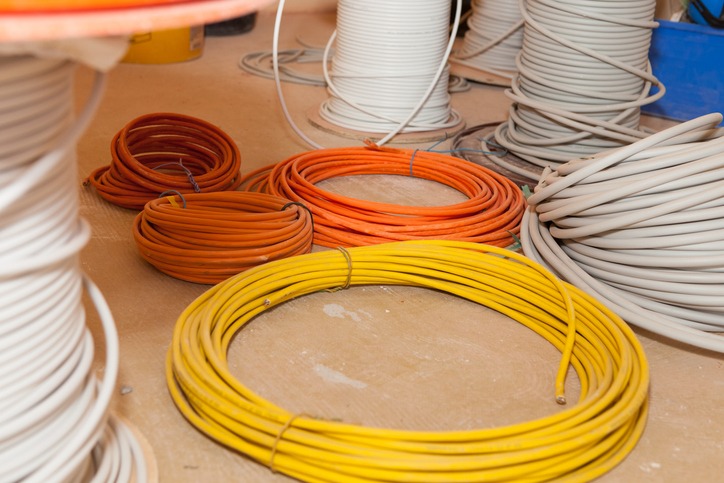
Outer Sheath Color (NMD90 Cable)
In Canada, residential NMD90 cables are often identified by the color of the outer sheath.
| Sheath Color | Gauge |
|---|---|
| White | 14 AWG |
| Yellow | 12 AWG |
| Orange | 10 AWG |
This color coding helps with quick identification on job sites, but always verify the printed markings on the cable.
Common Types of Electrical Wire
NMD90
-
Indoor residential use
-
Dry walls and ceilings
-
Most common household wiring
BX / AC
-
Metal-clad cable
-
Impact-resistant
-
Often used in basements
TECK / RW90 Wire
-
Outdoor or industrial use
-
Moisture-resistant
-
Surface-mounted or installed in conduit
Choosing the Right Wire: Common Mistakes to Avoid
❌ Using 14 AWG wire on a 20 A breaker
❌ Relying only on color without checking the designation
❌ Mixing wire gauges on the same circuit
✔️ Always match wire gauge to breaker amperage
✔️ Read cable markings carefully
✔️ When in doubt, ask for expert advice
Summary
-
Wire gauge determines current capacity
-
Number of conductors depends on application
-
Colors indicate wire function
-
Sheath colors aid quick identification
-
Code compliance is essential for safety
Need Help With Your Electrical Project?
The Pont-Masson team can help you choose the right electrical wire based on:
-
your project needs
-
current electrical codes
-
your experience level
Visit us in store or browse www.pontmasson.com to find a wide selection of electrical wire, boxes, breakers, and accessories.
The right wire means a safer, longer-lasting installation.